This article was written as a collaboration between Dr. Daniela Vergara and Lauren Gibbs
For a plant industry worth tens of billions of dollars, hemp and cannabis are governed by a problematically narrow idea: THC. Yet THC is concentrated almost entirely in the plant’s flowers. Meanwhile, the rest of the plant—especially the stems and stalks—contain only trace amounts of THC. Despite marijuana stalks meeting the legal definition of hemp, they are often discarded or destroyed.
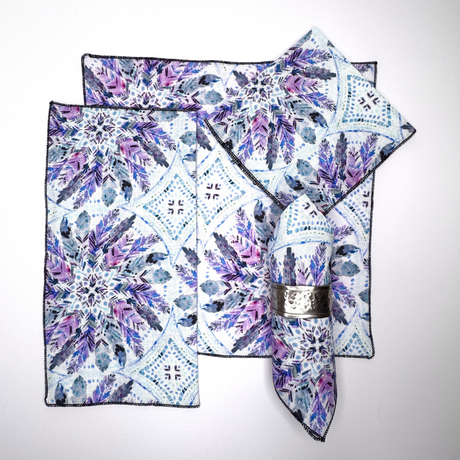
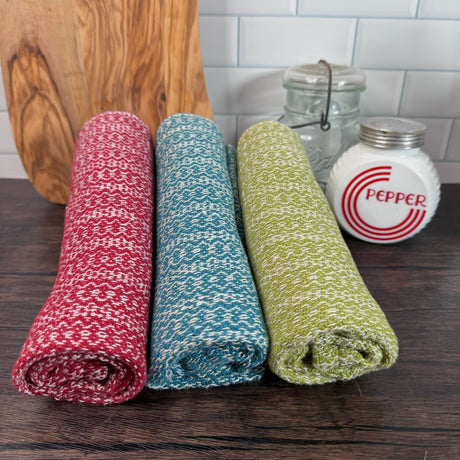
 Hemp stalks are the source of fibers used in all of Root for Hemp’s textile and paper products. Hemp stalks and stalks from intoxicating cannabis plants could be used for everything from animal bedding to doormats to packaging and more. Yet, we are literally trashing or burning possible usable material because our laws and supply chains treat all parts of the THC producing plants as intoxicating, even if that is scientifically inaccurate. If there are so many uses for hemp stalks, why haven’t we tried to see what we can do with marijuana-waste?
The truth is our fractured regulatory system’s fixation with THC is the root of the problem. It keeps hemp fiber from reaching its necessary scale to make it an affordable solution to many agricultural and environmental problems, and it keeps marijuana stalks from being used at all. Unfortunately the regulators do not fully appreciate the absence of THC in the rest of the plant–and are just obsessed with this one molecule that mostly exists in the buds.
[Read more on the problems with the way we regulate this plant in our earlier blog]

To help us understand the problem and how we could do things better, we worked with our bud Dr. Daniela Vergara to put together the first article in our new Stakeholder Series. At Cornell University, Dr. Vergara serves as New York’s State Extension office’s hemp specialist. Uniquely positioned in the State Extension Office, she could readily see state-based agricultural networks could make it possible to put this material to good use while still complying with the federal prohibition on interstate commerce. Dr. Vergara is working within the state’s agricultural community to try to redistribute cannabis waste as compost and animal bedding.
What is the biggest barrier to widespread adoption of her idea? The stalks are subjected to stigma among farmers thanks to our flawed THC regulatory fixation.

THC Is Not Evenly Distributed Throughout The Plant
Cannabis is one of the most chemically complex plants people regularly grow and consume. The plant produces dozens of compounds, but the ones that get the most attention are cannabinoids—especially THC, the compound responsible for cannabis’s psychoactive effects.
Today’s cannabis market is largely built around THC. Products are often priced, marketed, and evaluated based on THC potency alone. Over time, breeders and growers have responded to that demand by selecting plants that produce more THC. This selective breeding has dramatically increased the potency of cannabis flower compared to previous decades.
But here’s an important detail that often gets lost in discussions about cannabis chemistry: cannabinoids like THC and CBD are not evenly distributed throughout the plant.

All About The Buds
Cannabinoids are produced and stored mainly in the trichomes—the tiny, resin-producing structures that coat cannabis flowers. These trichomes are especially dense on female flowers, which is why cannabis grown for adult-use markets comprises exclusively female plants bred to produce large, resin-rich inflorescences, colloquially known as big juicy buds.
Nearly all the cannabinoids (including THC, CBD, CBC, and CBG) are concentrated in the flowers. Leaves contain much smaller amounts, and stems, stalks, and roots contain only trace levels.
If stems contained significant amounts of THC, people would already be smoking them. Instead, the stalks and stems of cannabis plants are typically treated as waste–and in many cases burned. And not the fun way.

Nature Can Be Wild
The legal line between “hemp” and “marijuana” is based on a strict threshold: cannabis with less than 0.3% THC is classified as hemp. Nature didn’t create this distinction, our Federal Government did, and the law falsely assumes THC production is a simple, tightly controlled trait.
In reality, THC levels emerge from a messy biochemical process where multiple enzymes compete and produce overlapping cannabinoids (THC, CBD, CBC, and CBG). Because all of these enzymes compete for the same starting molecule (CBGA) and can produce overlapping products, cannabinoid production is naturally variable.
Any grower knows that plants with very similar genetics can end up with slightly different cannabinoid profiles depending on variations in environmental conditions that are, by nature, hard to control.
Put simply, the law treats THC like a clean switch. The plant does not. Despite all our efforts to control it, this plant remains somewhat wild.

The Flower Economy—and Everything It Leaves Behind
While fiber and grain hemp remain relatively small sectors, cannabis grown for THC and CBD flower dominates the industry.
High THC legal adult-use and medical cannabis sales generated $28.8 billion in revenue in 2023, with demand expected to continue growing.
Low-THC hemp grown for CBD extraction—often called “floral hemp”—also represents a significant agricultural sector. In 2023, this crop produced 8.03 million pounds from 7,383 acres, with a reported value of $241 million, plus another $25.8 million from protected cultivation.
Taken together, THC and CBD focused production generates tens of billions of dollars annually and in the process wastes millions of pounds of plant material that contains almost none of these compounds.
This is the hidden cost to a flower-first industry that no one is talking about.

Not Perfect, But Already Here: Rethinking Cannabis Waste
Once the flowers are removed, the stalks meet the legal definition for hemp, but we still treat them like they contain an intoxicating amount of THC. Currently it is illegal to cross state lines with these stalks because the flowers, that have long been removed, contain THC.
Nearly all of those stalks are treated as waste.
While stalks from intoxicating cannabis plants cannot fully replace fiber hemp for high-performance industrial applications, they could still be used in lower-infrastructure products such as animal bedding, mulch, doormats, and fiberboard. Selling these materials for low-infrastructure projects could create a new revenue stream for struggling cannabis cultivators.

Dr. Vergara, through her work in the New York State Extension Office, could readily see state-based agricultural networks could make it possible to put this material to good use while still complying with the federal prohibition on interstate commerce. Dr. Vergara is driving all over the state to try to convince folks that there is already a legal way to make this waste a win for growers, consumers, and the environment.
The hemp industry will note that there are hemp varieties that are better suited for industrial fiber use, and that is true. But that kind of hemp fiber isn’t produced at scale in the United States. Ignoring these stalk and stem waste materials because a theoretically better plant variety exists does not solve today’s waste problem.
If the stalks are already here—and already being discarded—the real question isn’t whether they are perfect.
It’s why we aren’t even trying to use them?

References
ElSohly, M. A., S. Chandra, M. Radwan, C. G. Majumdar, and J. C. Church. 2021. A comprehensive review of cannabis potency in the United States in the last decade. Biological Psychiatry: Cognitive Neuroscience and Neuroimaging 6:603-606.
Hart, C. L., W. Van Gorp, M. Haney, R. W. Foltin, and M. W. Fischman. 2001. Effects of acute smoked marijuana on complex cognitive performance. Neuropsychopharmacology 25:757-765.
Innes, P. A. and D. Vergara. 2023. Genomic description of critical cannabinoid biosynthesis genes. Botany 101:270-283.
Jin, D., et al. (2020). "Secondary metabolites profiled in cannabis inflorescences, leaves, stem barks, and roots for medicinal purposes." Scientific Reports 10(1): 3309.
Page, J.E. and J.M. Stout, Cannabichromenic acid synthase from Cannabis sativa. 2017, Google Patents.
Sawler, J., et al. (2015). "The Genetic Structure of Marijuana and Hemp." Plos One 10(8): e0133292.
Schwabe, A. L., V. Johnson, J. Harrelson, and M. E. McGlaughlin. 2023. Uncomfortably high: Testing reveals inflated THC potency on retail Cannabis labels. PLoS One 18:e0282396.
Smart, R., J. P. Caulkins, B. Kilmer, S. Davenport, and G. Midgette. 2017. Variation in cannabis potency and prices in a newly legal market: evidence from 30 million cannabis sales in Washington state. Addiction 112:2167-2177.
Statista. 2024. Cannabis - United States. Retrieved October 18, 2024, from https://www.statista.com/outlook/hmo/cannabis/united-states.1-9.
USDA. 2024. National Hemp Report The National Agricultural Statistics Service (NASS), Agricultural Statistics Board, United States Department of Agriculture (USDA). https://downloads.usda.library.cornell.edu/usda-esmis/files/gf06h2430/3t947c84r/mg74s940n/hempan24.pdf.
Vergara, D., et al. (2021). "Genomic evidence that governmentally produced Cannabis sativa poorly represents genetic variation available in state markets." Frontiers in plant science 12: 668315.
Vergara, D., et al., Gene copy number is associated with phytochemistry in Cannabis sativa. AoB PLANTS, 2019. 11(6): p. plz074.
Volkow, N. D., R. D. Baler, W. M. Compton, and S. R. B. Weiss. 2014. Adverse Health Effects of Marijuana Use. New England Journal of Medicine 370:2219-2227.
Whitney, B. 2023. 2023 National Cannabinoid Report. https://whitneyeconomics.com/ Accessed on October 2024.
Whitney, B. 2024a. Cannabis Delinquencies: An Existential Threat to the U.S. Cannabis Industry https://whitneyeconomics.com/blog/executive-summary-cannabis-delinquencies-an-existential-threat-to-the-us-cannabis-industry- accessed on April 2024. Whitney Economics.
Zirpel, B., O. Kayser, and F. Stehle, Elucidation of structure-function relationship of THCA and CBDA synthase from Cannabis sativa L. Journal of biotechnology, 2018. 284: p. 17-26.